conservation easement
When Development Doubles Your Land Taxes: Conservation Easements, CUVA, and What Actually Helps
Development moves in, the assessor reassesses, and a tract that has been in the family for forty years suddenly costs real money to hold. A conservation easement is one answer — but it is not the same thing as CUVA, and the differences matter more than most landowners realize.
By Dewey "DJ" Snipes · September 10, 2026
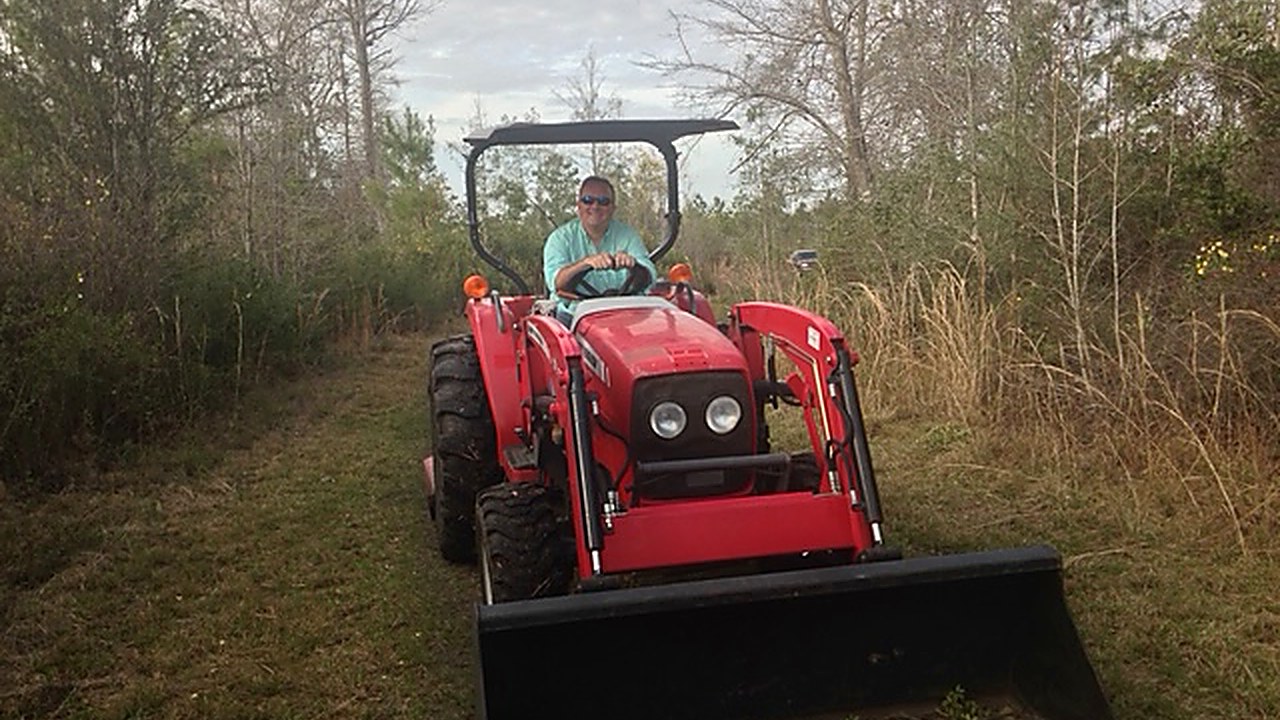
I sat with a landowner recently who opened his property tax bill and found it had roughly doubled. Nothing about his land had changed. He hadn't cut it, split it, or built on it.
What changed was everything around it.
New rooftops. New roads. New development pressure pushing values up on every parcel in the area — his included.
That is how the system works, and it catches people off guard every time. County assessors are required to value property at fair market value, and fair market value follows what land could become, not what you're doing with it today. A pasture that borders a new subdivision starts getting assessed like the next subdivision.
I told him what I'd tell anyone in that seat: he has two honest paths. He can sell into the same demand that raised his taxes — because that demand is real, and it's telling him something. Or he can keep it, pass it to his children, and find a way to make holding it affordable.
He wants to keep it. So we talked about conservation.
And that's where I want to slow down, because there are three different tools in that conversation and landowners mix them up constantly.
A covenant has a term. An easement is forever.
That single sentence is the most important thing in this article.
Georgia has property tax programs that reduce your assessment in exchange for a promise to keep the land in a qualifying use for a set number of years. When the term ends, you're free.
A conservation easement is not that. A conservation easement is a permanent restriction recorded against the deed. It runs with the land, forever, through every future owner. That permanence is exactly why the tax benefits are larger — and exactly why you don't sign one in a hurry.
Here's how the three stack up.
CUVA — the ten-year covenant
The Conservation Use Valuation Assessment is what most coastal Georgia landowners actually need first. You agree to keep the land in agriculture, forestry, or an environmentally sensitive use for ten years, and the county assesses it on its current use value instead of its development value.
The basics:
- Minimum of 10 acres, though a number of counties now require 25
- Maximum of 2,000 acres per landowner statewide
- Available to individuals and eligible domestic entities, not to foreign owners
- Renewable at the end of the term
The teeth are in the breach. If you break the covenant — sell off a piece for development, change the use, take it out early — you repay twice the tax savings you received up to that point, plus interest. And if you sell during the term, the buyer either continues the covenant or takes the penalty. That's a live issue in any land sale, and it's one of the first questions I ask when I list a tract.
One thing worth watching: Georgia voters decide a constitutional amendment this November that would raise the conservation use acreage cap from 2,000 to 4,000 acres. It passed the House 168–5 and the Senate 50–1, so it arrives at the ballot with real momentum. If you're already at the cap, that's a date to circle.
FLPA — for the timber tracts
The Forest Land Protection Act is the program built for larger working forest. It requires at least 200 acres in aggregate and runs a longer covenant than CUVA — fifteen years is the term the statute sets, though I'd have you confirm the current terms directly with your county board of assessors before you sign anything.
For a lot of the timberland in Wayne, Brantley, and Charlton counties, FLPA is the better fit than CUVA. For a 40-acre family tract in Glynn or Camden, CUVA usually is.
The conservation easement — permanent, and paid for accordingly
Here you donate development rights on your land, in perpetuity, to a qualified holder — a government agency or an accredited land trust. You keep title. You keep farming, timbering, hunting, and living on it, within whatever rights you reserve in the document. What you give up permanently is the right to subdivide and develop.
In return, three things can happen on the tax side:
A federal charitable deduction. The donated value is generally deductible against your income, with a long carryforward if you can't use it all at once. Qualified farmers and ranchers get more favorable limits.
A Georgia state income tax credit. The Georgia Conservation Tax Credit is worth 25% of the fair market value of the donation — up to $250,000 for an individual and $500,000 for a corporation or partnership, with a ten-year carryforward. The state awards a total of $4 million a year, first come, first served.
A smaller estate. This is the part that matters for the landowner passing acreage to heirs. Restricted land is worth less on paper, which can meaningfully reduce what the estate is valued at — and reduce the pressure on your children to sell a piece of it just to cover the bill.
One time-sensitive note, and I'd rather you hear it from me than find out later: the Georgia Conservation Tax Credit is currently set to sunset on December 31, 2026. Senate Bill 515 would have extended it through 2031. It passed the House and ran out of clock in the Senate before the session ended in April. Lawmakers may take it up again in 2027, but as the law reads today, the state credit has an expiration date on it. If a Georgia credit is part of why an easement makes sense for you, that changes your timeline considerably.
The do's
Do bring in your CPA and an attorney who actually does this work. Not a general practitioner. Conservation easements are a specialty, and the document you sign outlives you.
Do get a qualified appraisal from a qualified appraiser. The valuation is the whole ballgame, and it is where the IRS looks first.
Do choose an accredited land trust. Accreditation through the Land Trust Alliance is a real standard, and it's also what the Georgia credit requires of the holder. This organization will be your partner permanently — vet them like it.
Do read the reserved rights section three times. Can you build a barn? A second home for a child? Cut timber, and on what schedule? Run cattle? Everything you don't reserve, you've given away, and there's no going back to negotiate.
Do sit down with your heirs first. I've watched this go sideways more than once. The parents love the idea. The children were quietly counting on selling. Have the hard conversation while everyone's at the table.
Do budget for stewardship. Land trusts typically ask for a contribution to a stewardship fund to cover monitoring the property every year, forever. That's a real cost at closing.
The don'ts
Don't confuse the tools. Ten years of CUVA is not a conservation easement, and a conservation easement is not ten years of anything. If someone tells you an easement expires, walk.
Don't treat it as an exit strategy. An easement lowers the market value of your land — that reduction is literally what you're being credited for. If there's any real chance you'll want to sell to a developer down the road, this is the wrong tool.
Don't touch a syndicated deal. If someone approaches you with an investor partnership promising a deduction several times what people put in, that is the exact structure the IRS has spent years dismantling in court — with 40% valuation penalties and criminal convictions for promoters. Congress added a rule in late 2022 disallowing most pass-through easement deductions above 2.5 times basis. Legitimate easements are donated by landowners on land they've held and loved. That's the version that holds up.
Don't let anyone pressure the appraisal upward. An inflated number doesn't get you a bigger benefit. It gets you an audit.
Don't breach a CUVA covenant casually. Double the savings back, plus interest, is a bigger number than most people expect ten years in.
Don't sign in December because someone says the credit's running out. Yes, the state credit has a real deadline. That's a reason to start now — not a reason to skip the appraisal, the attorney, or the family conversation.
I got my start in this business in 2003 at White Columns Land & Timber, and land is still where I'm most at home. Tracts are not houses. The tax treatment, the covenants, the heirs, the timber, the access — all of it is its own body of knowledge, and most of it never comes up in a residential transaction.
If your assessment jumped this year and you're trying to decide whether to hold or sell, I'm glad to walk the numbers with you either direction. Sometimes the answer is a covenant. Sometimes it's a listing. It should be whichever one is actually right for your family.
I'm a real estate advisor, not a tax attorney or a CPA. Everything above is general information about how these programs work in Georgia — not tax or legal advice for your specific situation. Confirm the current rules with your county board of tax assessors and your own professionals before you sign anything.
Dewey "D.J." Snipes Real Estate Advisor | Engel & Völkers Golden Isles (912) 223-1301 · gacoastrealtor@gmail.com